
Masonry Repair and Garage Lintel Restoration in Nashville and Middle Tennessee
Cracked bricks and failing lintels are not just cosmetic. They let moisture in and often signal a deeper structural issue. We fix the problem correctly the first time.
Brick and masonry damage is one of the most common issues we see on Nashville-area homes and commercial buildings. Whether you have cracked brickwork, deteriorating mortar joints, a sagging garage lintel, or a failing retaining wall, our team provides expert repairs that restore both the structural integrity and appearance of your property. We serve homeowners and property managers in Nashville, Columbia, Franklin, Brentwood, Spring Hill, Murfreesboro, and throughout Middle Tennessee.
What Is a Lintel and Why Does It Matter?
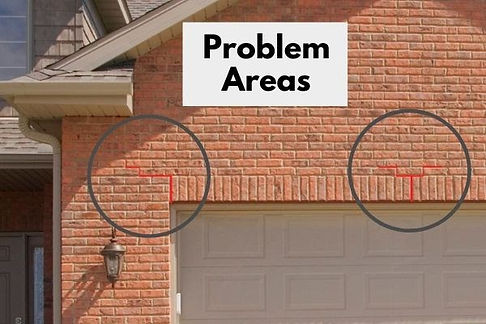
A lintel is a horizontal structural support that spans an opening, such as a garage door, window, or doorway, and carries the weight of the wall or structure above it. When a lintel begins to rust, bend, or fail, it can no longer support that load properly. The result is cracked or displaced brick above the opening, gaps between the lintel and the brick course, and in severe cases, sagging or collapse of the masonry above the opening. Garage lintels made from steel are particularly vulnerable to rust in Tennessee's humid climate.
Common Signs of Masonry and Lintel Damage
Stair-step cracks in brick or block walls are one of the most recognizable signs of masonry stress. These diagonal cracks typically follow the mortar joints and often indicate foundation settlement or lintel failure. Other warning signs include: horizontal cracks running along mortar joints, gaps between the brick and the lintel above a garage or window opening, bowed or bulging brick sections, mortar that is crumbling or missing between joints, and water staining on interior walls that traces back to exterior masonry gaps.


What Causes Masonry Damage in Tennessee?
Tennessee's climate creates specific conditions that accelerate masonry wear. Freeze-thaw cycles in winter allow water that has entered small cracks to expand and widen them over time. High summer humidity promotes efflorescence and mortar degradation. Clay-heavy soils common throughout Middle Tennessee expand and contract with moisture changes, causing foundation movement that transfers directly to the masonry above. Older homes in Nashville, Columbia, and Brentwood often have lintels that were undersized by modern standards or that have deteriorated over decades of exposure.